 Jobi
How I Got My Second-Year Visa Days Working Near the City (My Experience)
Hi! I'm a working holiday maker, and I've been working on civil sites in Brisbane for a year now.
Come over on a working holiday visa and you'll soon run into two big questions:
"the 6-month limit with one employer" and "the work days you need to extend your visa".
I sorted out both while working near the city. Here's how I did it, and the official rules behind it.
※ Quick disclaimer: I'm not a migration agent, and what follows is what worked in my case. Visa rules can change and everyone's situation is different, so always check the official Home Affairs pages yourself at the end.
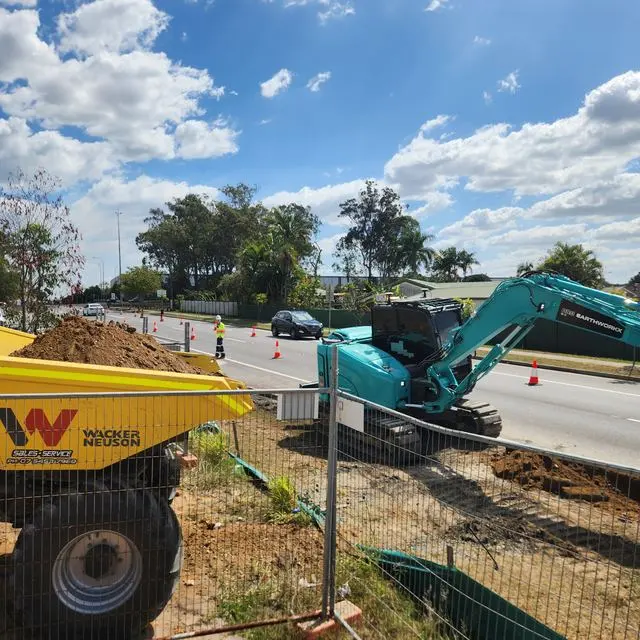
1. Visa extension work days - you don't have to go far from the city
In short, work done in disaster-declared or regional areas counts towards the work days you need for a visa extension.
It's listed under "Natural disaster recovery work" on the Specified work page of the Home Affairs website.
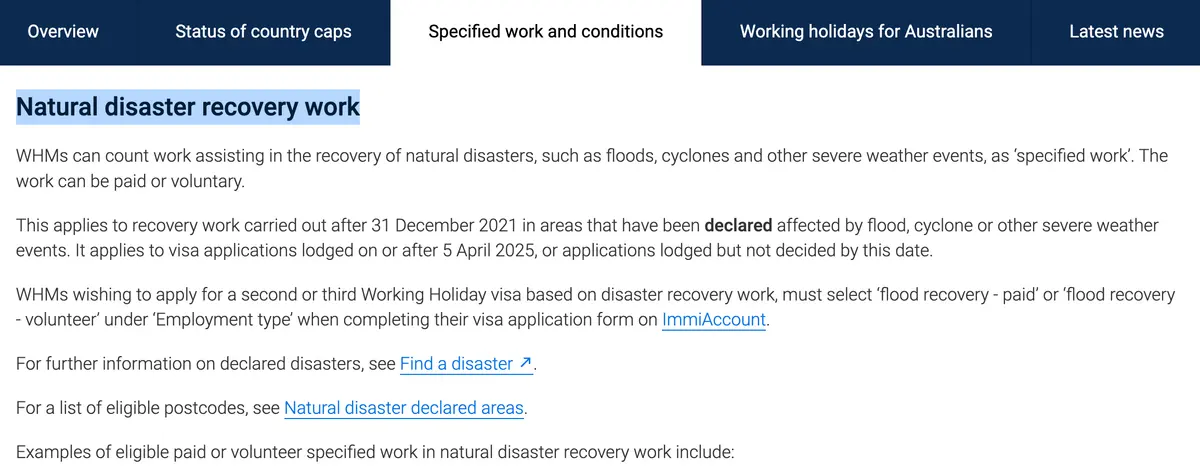
Because of the 2022 floods, plenty of places close to the city were declared disaster areas.
The examples I listed in my guide are Pallara, Eight Mile Plains and Park Ridge. Working on disaster recovery projects at sites in areas like these lets you rack up the work days you need for your visa extension.
When you see the word "regional", it's easy to assume you need to be far from the city. But disaster area declarations are a separate criterion, so places near the city can still count.
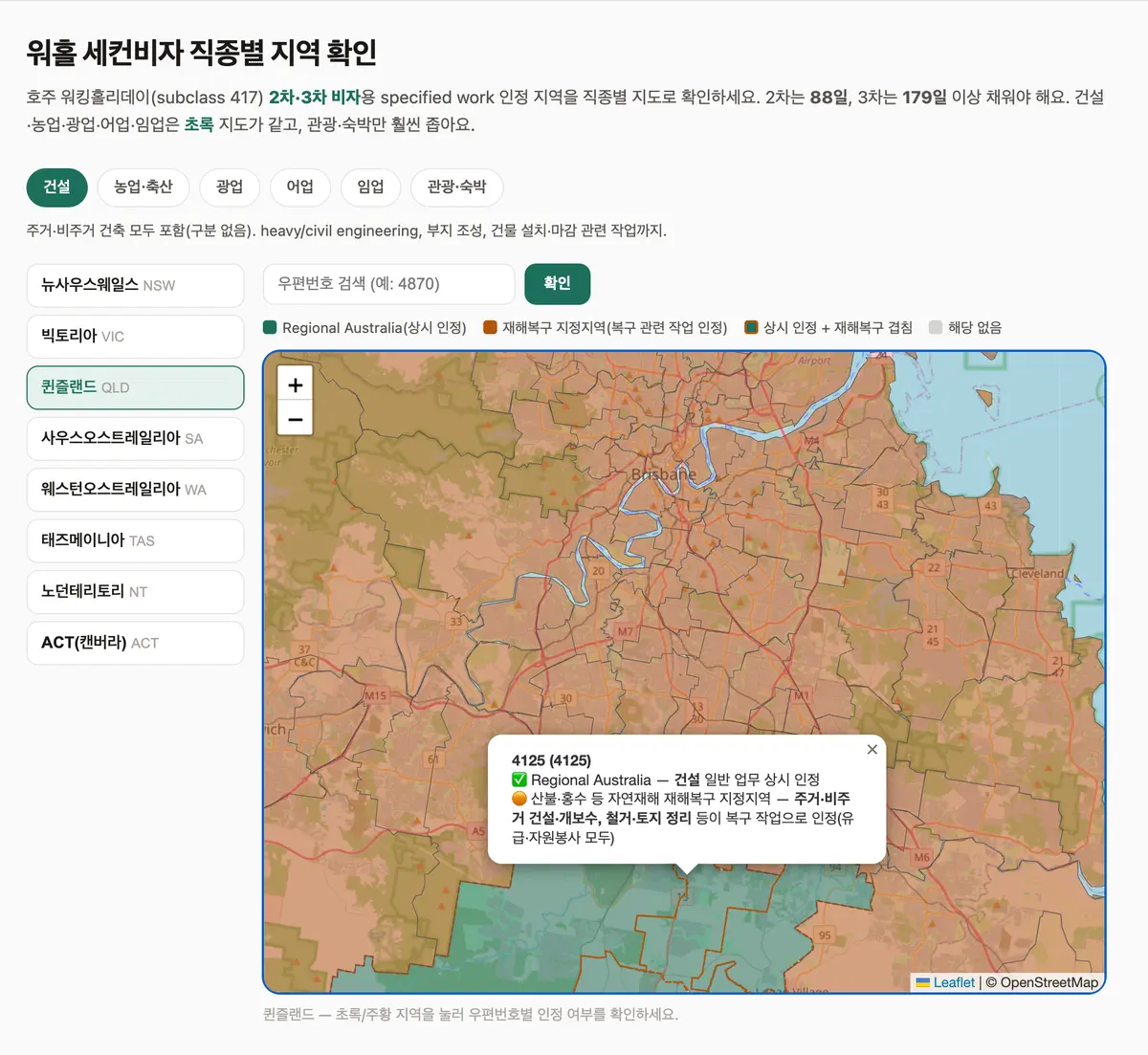
If checking postcodes one by one sounds like a pain, I've made a working holiday regional area map on Jobi, colour-coded by state. Still, always do your final check on the official pages.
2. The 6-month work limit (Condition 8547)
The working holiday visa has a condition (Condition 8547) that says you can't work for one employer for more than 6 months.
But Home Affairs has set out exemptions to this condition. Look up "Exemptions to condition 8547" on the official page.
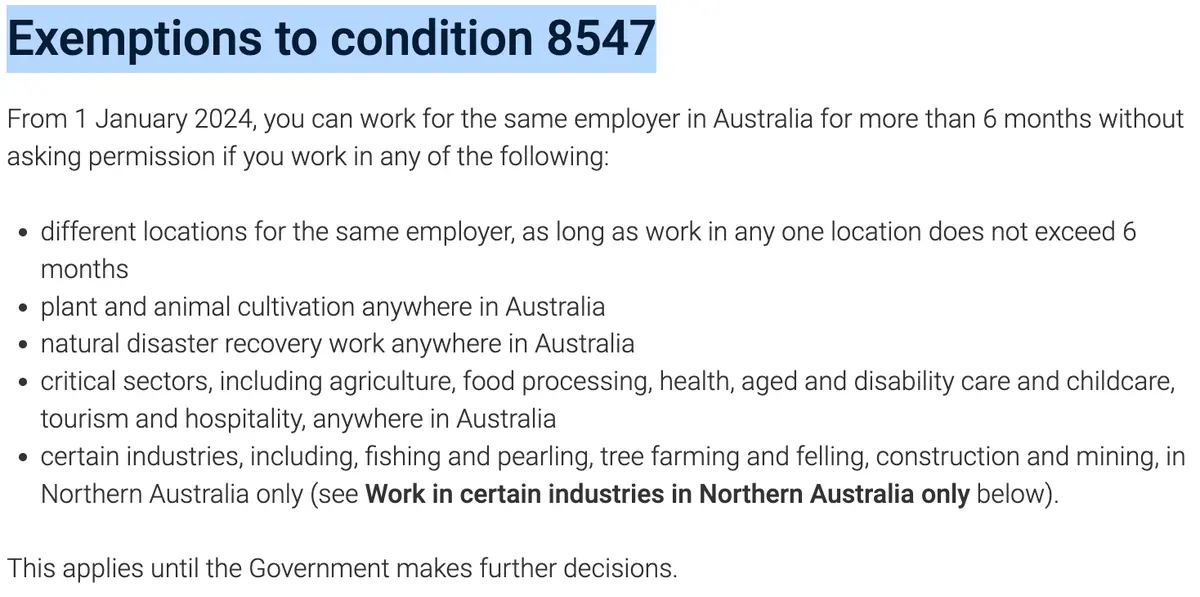
I'll just explain how I understood and applied this condition.
My understanding was: "as long as I don't work on the same site for more than 6 months, I don't need to change companies." In civil, unless the development is bigger than around 50 lots, you don't often stay on the same site for more than 6 months.
That said, this can be interpreted differently depending on the situation, so check your own case on the official page.
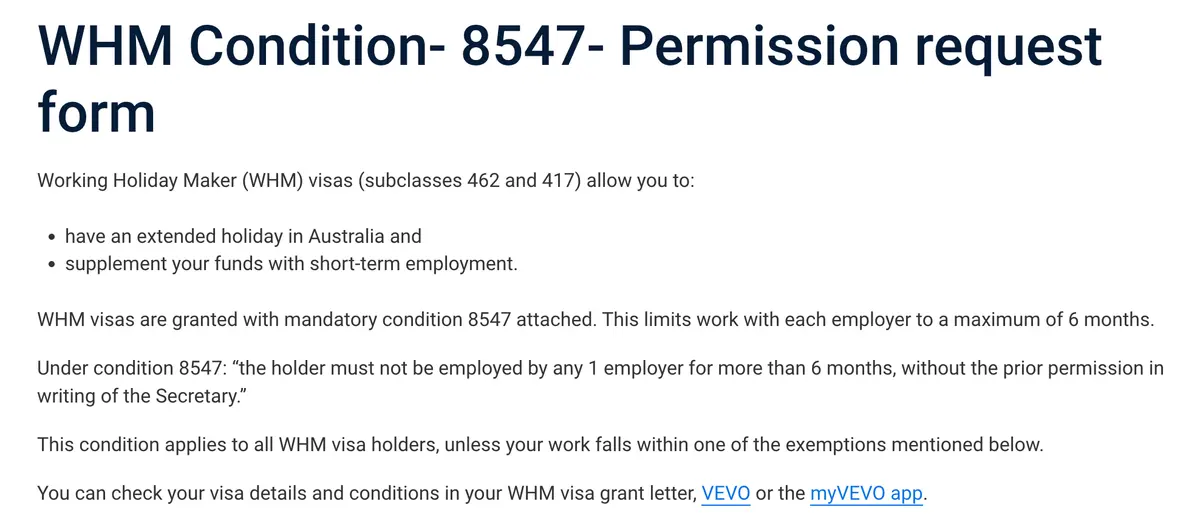
Also, if the company needs you, as shown below, it can ask Home Affairs for an exemption from the 6-month limit.
Building a good relationship with your company and getting them to submit this form is another good option.
3. How to check if your site qualifies
1. Find out the address and postcode of the site you'll be working on.
2. Look up that postcode on Jobi's working holiday regional area map or the official list.
3. Check it against the relevant item on the Home Affairs Specified work page (natural disaster recovery work, or the regional area criteria).
4. Keep your contract and payslips from day one so you can prove your work period.
Don't just assume "it's close to the city, so it obviously won't count". If it's a declared area, it can count even if it's nearby. On the flip side, starting work without checking because you think "this one should be fine" is risky too.
4. My timeline
- About a month after arriving, I started as a casual labourer at my current company
- Been with the same company for about a year now
- Second-year visa approved using my payslips from this company
Your payslips are your evidence later on, so keep every single one.
5. When you're job hunting
I covered how to find work in my previous post, "How I landed an Aussie site job: $4,000 on tickets, 150 Seek applications and a Google Maps 'civil' search".
If you check the site location before the interview or signing your contract, it makes getting your work days recognised much easier later.

Wrapping up
Visa mistakes are hard to undo, so please treat this post purely as me sharing my experience of "this is what I did and it worked". This post is current as of October 2026.
The visa section of my free guide "From visa to your first day on site" covers today's topic along with links to the official sources.
🧭 Read the guide: "From Visa to Your First Day on Site" →
I can't give visa advice — I can only answer based on my own experience. Leave any questions in the comments.

Want to unlock all the guides?
🔒Every guide with photos from real Aussie construction sites, plus 🔒every word with pronunciation and example sentences, all in one go.
Pay once, keep it for life. No sign-up needed: it unlocks instantly with the email you paid with.
💪 Aussie construction work pays about A$35 an hour
That's just 9 minutes of work for lifetime access
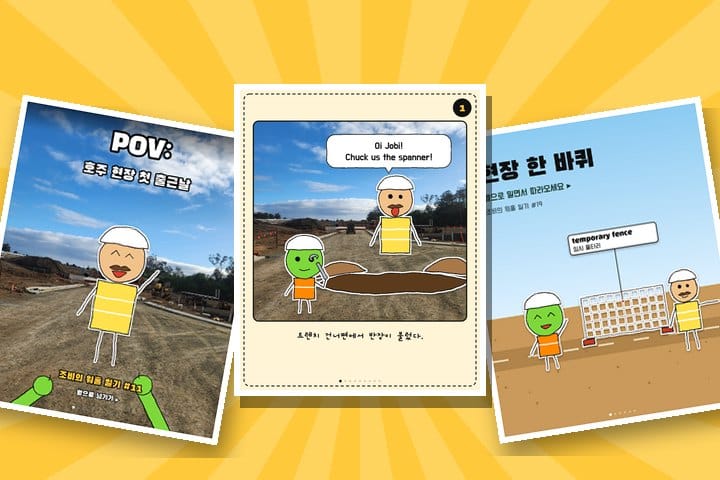 Finished the guide?Jobi's Working Holiday DiaryKeep learning site English through comics. We'll let you know first when a new episode drops.Follow @jobie.voca on Instagram →
More posts
- $4,000 on Tickets, 150 Seek Applications, and a Google Maps Search for "civil": How I Landed an Aussie Site Job2026-10-07
- Aussie Construction Site English: How Much of the Foreman Can You Understand? (Working Holiday Site Job Prep Test)2026-10-04
- Your First Day on an Australian Construction Site: The Complete Gear Checklist (Only What a One-Year Worker Actually Uses)2026-10-03